On its 250th birthday, it is safe to say that the USA is one of the most influential countries in the world. It says it is a global super-power, but it acts like a global super-villain.
There is a reason that the USA acts as it does today, and that reason is in its brutal origins.
Born as an English colony in 1600s, by the time it declared independence in 1776 its white male elite had managed to set up a male hierarchy, break down allegiances between poor white and black men, and set both against the indigenous Americans. This was a very effective divide and rule strategy: with the enmity between each group so consuming that they did not even think to unite against the ruling elite who held them all down.
Much of this was done using the law as a tool. This is the story of how they did it.
Importing English Inequality
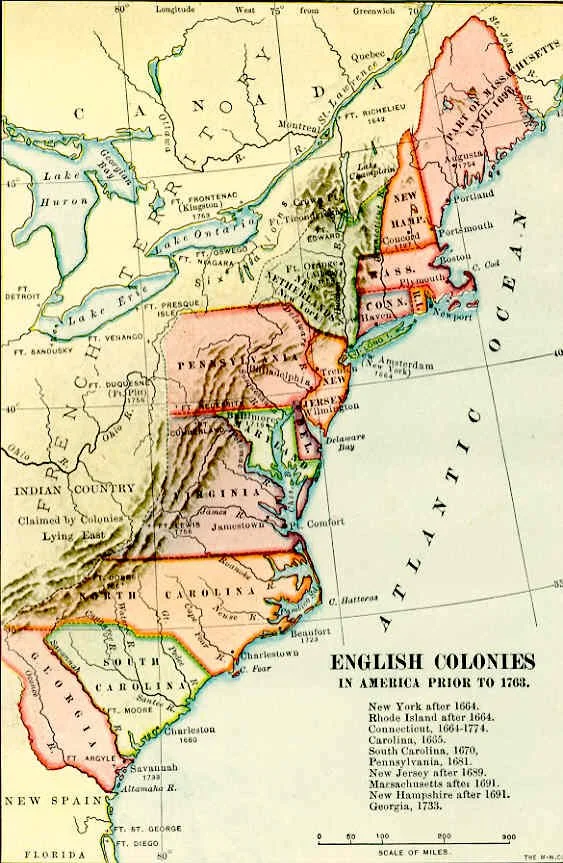
When the English elite decided to colonise the Americas, there was a tragically ‘anything goes’ mentality, that would create something brutal. King James I claimed what is now South Carolina all the way up the east coast to Canada in his original 1606 charter for the Virginia Company and the Plymouth Company. He gave them permission “to make habitacion, plantacion and to deduce a colonie… at any Place upon the said-Coast of Virginia or America where they shall think fit and convenient.”.[1]
The first group of English to arrive on what would eventually become the USA in 1607, included a disproportionate number of aristocrats and gentlemen. The Virginia Company had rounded up 105 English soldiers and other chancers out to make their fortune. No women boarded the three ships destined for Virginia. John Smith, who would end up the first Governor, was just twenty six and had already fought in numerous wars. Engraved on his coat of arms was his motto, ‘vincere est vivere’ – ‘to conquer is to live’. On the journey with him he counted one carpenter, two blacksmiths some footmen as well as, “gentlemen, Tradesmen, Servingmen, libertines, and such like.”[2] These already wealthy men were principally in search of more wealth.[3]
Profit making was always the top priority of the Company. James I had granted the colonists the right to, “dig, mine, and search for all Manner of Mines of Gold, Silver and Copper.” [4] The plan was to set up capitalist agriculture based on the English style, with landlords, tenants and wage labourers, distinguished only by the fact that the landlord was an absentee (back in England).[5]
The 1606 charter decreed that the King would appoint a thirteen man council in England to oversee the colonies, and that the settlers would establish their own thirteen man council to govern themselves.[6] John Smith was elected the colony’s Governor in 1608 and the officers of the Virginia company ruled it, first as a draconian military dictatorship, and then as a draconian civilian administration, but always for their best interests and profit. The officers included a succession of veteran officers from the wars in Ireland and the Netherlands. As a result, the Early farmers and labourers were subject to the severities of the military code: “Lawes Divine, Morall, and Martiall,” whose punishments included: cutting off ears, boring through the tongue, whipping offenders through the town tied to a cart, banishment from the colony to the wilderness, and inducement of premature birth and infanticide by the whipping of pregnant women. These were for offenses as minor as speaking ill of a master or official, stealing food from a master’s store, and failure to complete a work task.[7]
Once open military dictatorship was over, the colony was governed by a newly created General Assembly, the Colony Council and General Court. Those high up in the company used their legal authority to secure special advantages, succeeding each other in various high offices. Making up the Colony Council, they determined the local laws and controlled the public stores of food, arms and gunpowder. As the Virginia General Court, colony council members dispensed judgments as harsh as they pleased.[8]
Starving and Subjugating
Powhatan, the leader of the indigenous people the English had landed among, was made an elaborate show of diplomacy by John Smith in 1608. He was crowned “king” and given gifts, by which the English intended that he had acknowledged his submission to the crown. Meanwhile, the inept soldiers and gentlemen, unwilling or unable to clear fields and or plant and harvest their own crops, stole stores of corn and beans from Powhatan’s people.[9]
The Jamestown colony was unable to feed itself and it was not long before it was starving. The colonists decided that they would force the farmers of the Powhatan Confederacy to provide them with corn. John Smith threatened to kill all their women and children if they would not feed and clothe the settlers as well as provide them with land and labour. When they didn’t, war against the Powhatans was declared in August 1609 and the destruction of the Powhatans became the order of the day.[10] Still hungry the colonists revolted and sent John Smith back to England saying that his leadership was “a misery, a ruine, a death, a hell.” That winter what had become five hundred colonists were reduced to sixty.[11]
The war dragged on for a year, the colony’s lieutenant governor George Percy, the eighth son of the earl of Northumberland reporting that “many, through extreme hunger, have run out of their naked beds being so lean that they looked like anatomies, crying out, we are starved, we are starved”, and reporting that, “one of our Colline murdered his wife Ripped the Childe outt of her woambe and threwe it into the River and after Chopped the Mother in pieces and salted her for his food.”[12] In 1610, the new English governor, Thomas West, ordered forces mobilised by George Percy "to take revenge" and destroy the Indigenous population. In his report following the assault, Percy gloated over the gruesome details of killing all the Powhatan children. Nevertheless, despite the terrorizing tactics of the settlers, the Powhatans were able to protect their grain storage buildings and force the Jamestown settlers to retreat back to their colonial fortress.[13]
After the war, the Jamestown Governors were able to force the Powhatan into supplying the colony with corn through trade. Despite having escaped annihilation from starvation, the directors of the colonial companies were obsessed with the benefits of tobacco cultivation for the colony, as it had a quick turnover and profits for them.[14] Corn cultivation on the colony was deliberately restricted and tobacco cultivation demanded. The only way for farmers and labourers to get food and other goods was through the Powhatans and the English – whose relationship the governors controlled. So, the aristocratic British elite controlled the land, determined the local laws and controlled the public stores of food, arms and gunpowder. They also commanded the special bodies of armed men who enforced “order”, the colony’s relations with the mother country and with the indigenous Americans.[15]
Up the east coast a new colony was established in Plymouth. Prior to the ship the Mayflower’s arrival in 1620, smallpox had killed the many of the indigenous Pequot fishing and farming communities in the area. This allowed the new settlers to move in to what would become Maryland. But once the Pequot communities had recovered, the Maryland settlers saw them as a threat to their expansion into Connecticut, so they began a war of annihilation, entering Indigenous villages and killing women and children or taking them hostage. When only two hundred half-starved Pequots of the original two thousand remained, the colony commissioned mercenaries to burn the few remaining homes and fields. The other Indigenous nations of the region assessed what was in store for them and accepted tributary status under the colonial authority.[16]
Meanwhile in Virginia, the Powhatans organized a stronger confederacy in retaliation. In 1622, they attacked all the English settlements along the James River, killing 350—a third of the settler population. Unable to eliminate the indigenous population by force of arms, the colonists then resorted to a "feedfight," – a systematic destruction of all the Indigenous agricultural resources.[17]
After this attack, illogically, the authorities issued more rather than less restrictions on planting corn. Together with a ban on hunting for food in the forests this left the colony again with a massive food supply problem. The monopolists who controlled the trade of corn were able to profiteer by setting the prices. The price of corn was 10-15 shillings per bushel in winter 1622 but by 1623 the price had octulpled to twenty shillings per bushel.[18]
From 1922 onwards, the settlers continuously raided Indigenous villages and fields with the goal of getting food for themselves but also starving the indigenous people out of the area. This culminated in the Tidewater War (1644-46) whereby the few indigenous families that remained in eastern Virginia fell under the absolute dominance of the English. Now, in the absence of indigenous sources of food and labour, the colonists brought in indentured European labourers to do the work.[19]
The Servant Trade
At the early stages of the Virginia colony there were five officially recognised social classes. Two of them were the owning class: gentlemen and the freemen, small independent farmers and self-employed artisans. The other three were the dependent labouring classes: the tenants-at-halves, the hired labourers, and the apprentices. [20]
The colony needed cheap labour and the elite back in England were keen to rid themselves of the huge amount of poor people they had recently created by enclosing the common land. So, a win-win situation was devised whereby the Virginia colony would be supplied with surplus English poor.
In 1617, the English Privy Council issued a warrant for the transportation of a number of “malefactors” then being held in custody in England, to Virginia. In 1619, a hundred prisoners were sent along with Irish people who had been kidnapped from their own country during the plantation of Ulster to be “servants”. In 1618, the London Common Council and the Virginia company agreed upon the “taking up” of one hundred homeless boys and girls aged eight to sixteen for shipment to Virginia. A year later, the Company congratulated itself and the city fathers on the successful delivery of the full one hundred, minus “such as dyed on the waie.” The Company then proposed a renewal for another one hundred but this time aged “twelve years old and upward.” Fifty young people were delivered in 1620, called “Duty Boys” after the name of the ship. The Duty boys were to be apprenticed, bound to labour for their masters for seven years, and to receive no wages except their board and keep. During 1618-22 considerable effort was made to recruit more “vagrant children” mainly, but not exclusively from London, to work in Virginia.[21]
Women were also imported as a monopoly trade of the Virginia company. Between August 1619 and April 1620, ninety “young maids to make wives” were shipped from England. They were listed on the cargo as “provisions” and sold on arrival. Another shipment of women on board The George in 1621 were to be sold at, “120 lbs weight of the best leafe Tobacco.” The price of women on the Warwick a month later was increased to 150 lbs of tobacco. The Company decided who was eligible for buying and marrying these women – they were only to be sold “to freemen or tenants as have means to maintain them.” Indeed, one labourer complained that women were so “well sold” that a poor man could “never get possession of one.”[22]
In the early years of the colony the form of labour conformed to English law and practices with labourers working under mutually binding contracts and assured some propertied status at the end of the term. However, there began a practice of reneging on agreements made with labourers before their departure once they arrived in the colony. Rather than having the entitlements they had agreed to, they were transferred immediately to another employer with worse terms. This practice of transferring a labourer from the service of one master to another meant that no longer was the contract for labour an agreement entered into between the labourer and the employer; it was now a transaction between two employers, reducing them to chattel like status. Many knew it was wrong. Worried friends and family of those transported to Virginia pressed the Company Court but not much was done, labourers complained in letters home: “sold… like a damd slvae!” raged one. Yet although this practice was acknowledged as a violation of their contractual rights by the Virginia company in London, the Governor of Virginia got nothing more than a telling off. Indeed, they were complicit. At the liquidation of the Virginia company in 1623, the Privy Council in England gifted Governor Yeardley twenty tenants and twelve boys that had been left by the company to dispose of, “to his best advantage and benefit.” Many of the Duty Boys when they completed their seven-year team were not promoted to tenants-at-halves as they should have been but were divided up among the Governor and members of the colony council.
In 1622 and 1623 there began a custom that a newly arrived labourer would have to work for free for a specified length of time to pay off the cost of his transportation. Labourers had a specified number of years that they were compelled to work for free. Many contracts were set by the “custom of the country”, at first this was four years, but in 1661 it was increased to five years. The Virginia colony established a system of one-way bondage, in which the labourer could not end the tie to the capitalist; but the capitalist could end the tie with his worker.[23]
This exploitation led to a thriving "servant trade" bringing chattel labourers from Britain. In England, men and women were sold for £2 per head. Or, if they were already in captivity as convicts or workhouse inmates, less. By 1637, when the good ship Tristram and Jane arrived in Virginia, all but two of its seventy-six passengers were bond-labourers to be offered for sale.[24] The majority of these were involuntary labourers who fell into two categories; 1) those who came under sentence as convicted felons and political prisoners including captives taken in civil war in England, Scotland and Ireland. 2) those who were kidnapped - taken by “sprits” - so called because they spirited their victims away, either by force or deception. The few voluntary labourers came under indenture contracts.
Importing the poor, women and men of low status was extremely profitable for merchants and investors. Merchants could generally count on a profit of from 50 to 200 percent on the sale of their bond-labourers once at the colony. The shipment of convicts to be plantation bond-labourers was an especially profitable branch of the trade as it was subsidised by the English Government. James Revel arrived in Virginia some time before 1680 at eighteen years of age, having been sentenced to fourteen years' bond-servitude. The convicts who survived the voyage were sold by the ship's captain for his own or his employer's account. Until 1683, captains of ships delivering European bond-labourers received an additional bonus, a fifty-acre ‘head-right’ of land on each one, a claim that the shippers almost invariably sold rather than entering into the cultivation of tobacco themselves.[25]
In all, some 92,000 European immigrants were brought to Virginia and Maryland between 1607 and 1682. More than three-quarters of them were chattel bond-labourers, the great majority English with a few Scots and Irish.[26]
Degrading the labourers and tenants to chattels
In order to increase the profitability of their free bond-labour force, the colonial governments began to use the law to bind the labourers to them for longer periods.
In 1626, the criminal law began to be used to extend bond-labourers servitude as a form of punishment. In Virginia, the penalty for running away was fixed at two days extra servitude for every one day of absence, and in 1666 in Maryland it was ten days for each day of absence. After running away, John Joyce was sentenced by the General Court to thirty lashes and a total of five and a half years extra labour. In 1626, Henry Carman, one of the Duty boys, was sentenced to seven years added unpaid labour for “fornication”. ‘Pass Laws’ in Virginia in 1643 and 1663, and in Maryland in 1671, made a labouring person subject to arrest as a fugitive unless he or she had a pass signed by their owner or other officially designated person, meaning enterprising employers could retain labourers past their release date even though they were entitled to be free. In 1662 the penalty for hog-stealing was two years' added servitude for each hog, and a law passed in 1679 made the third offense punishable by death.[27]
The punishments for run away labourers became more and more extreme. In Virginia for a repetition of the offense of running away the labourer was to be branded on the shoulder with a hot iron R, and in Maryland in 1641, the death penalty was provided. Sheriffs would receive payment for arrests, pillorying and whipping in both Virginia and in Maryland incentivising them to prosecute.[28]
It is easy to see why the colony began to experience such a problem with running away, the masters of bond-labourers were allowed to get away with treating them with brutality and hardship. There were both extreme cases of murder and rape as well as the routine cases of illicit extension of servitude and deprivation of food and clothing. There is no way of knowing how many bond-labourers died as a result of starvation, or overwork, or by physical abuse by their owners or on their owners' orders in seventeenth-century Virginia and Maryland. There were at least half a dozen murders of bond-labourers by their owners. A law passed by the Virginia Assembly in 1662 forbidding secret burials is clear evidence that such occurrences, were frequent. There were instances of courts ordering that a bond-labourer be sold away from an abusive master. But even on those extremely rare occasions, the owners were not penalized other than by being fined a relatively small amount of tobacco. [29]
Not content with chattel status of the labourers, the elite of the colony also sought to subjugate the poorer free-men (tenants) to such a position of servitude. They began a process of robbing them of their rights and status.[30] Because tenant farmers were compelled to plant profitable tobacco at the expense of necessary food stuffs like corn, and the monopolists controlled the corn trade, the cost of corn was rising, while the price of tobacco was falling due to overproduction. The plantation elite fixed the exchange rate of tobacco effectively making it worth half what it was while at the same tenants were compelled to pay extortionate prices for corn to get them through the year. This imbalance forced them into debt, and many had to be “rented out” to private planters to pay their debts. One ex-tenant John Radish became a “rented out” tenant-at-halve who found himself so destitute late in 1622 that he was compelled by necessity to work for his master for food and clothing only, or die of starvation. Many tenants were compelled to submit to the status of unpaid bond-labourers - indentured servitude.[31]
By 1650s, England was in a mess. From 1642 it had been in civil war and by 1649 it had beheaded its king Charles I and was now under the control of the military dictator Oliver Cromwell. In the chaos of the period, twenty thousand dissenters fled England and settled in New England between 1630 and 1640 founding a new colony in Massachusetts Bay.[32]
Controlling Women
There was an extremely high ratio of men to women in the early colonies and this imbalance made it easier for women to be dominated.[33] As we have seen, the few women who were there had been sold to farmers as wives or tricked into bond-labouring.
The American colonies inherited British male supremacism as a fundamental premise of colonial life. Crimes against, and abuse of women by men of all classes such as uxoricide (wife killing), rape, denial of access to food, eviction, sexual abuse, economic exploitation, and battery seem to have been rife and only sometimes came to the notice of the courts.[34] In general, the seduction, abandonment and sexual exploitation of many women, particularly those most vulnerable – the bond labourers - was a regular occurrence.[35] In a double standard, a woman was punished more harshly than men if they killed their spouse – she was not just hanged, she was gibbeted - left in chains to rot for years in public as an example.[36]
Like in England, women once married became a feme covert, meaning her legal identity was subsumed into her husbands, and they became “one person in law.”[37] This meant, as the English legalist Blackstone said, the law made “the husband the complete controller of the being, the mind, the will and the body of his wife.”[38]
In order to keep them silent, women were punished for speaking their minds. In colonial towns and villages, as in England, women were criminalised for being “gossips” and “scolds”. They could be gagged and placarded with a description of their crime, and made to stand in the market square. Their tongues could be fastened with a cleft stick or they might be sentenced to the “ducking stool”. In Virginia in 1634, Betsey Tucker the wife of John Tucker was subjected to this water-based torture because she, “by ye violence of her tongue has made his house and ye neighbourhood uncomfortable.” Betsey Tucker was tied to a machine and ducked five times head first in the pond before she begged her persecutors to stop and agreed to “sin no more.” She then walked home in her wet clothes. [39]
Masters controlled the sexuality of their female bond-labourers who were forbidden sexual relationships. In normal English capitalist conditions, the right to marry was exercised by anyone except apprentices who needed the permission of their masters. But in Virginia, marriage was fundamentally incompatible with the bond labourer’s chattel status. A law of 1643 forbade bond-labourers from marrying and the punishment was one years’ extra servitude. Despite being forbidden to marry, they were granted no exemption from the laws against sexual activity: "fornication" and "adulterie" were punishable by a fine for those who could pay it, or whipping or two or three months' imprisonment.[40]
Severe penalties were imposed on female bond-labourers who became pregnant, because her pregnancy, child-bearing and childcare responsibilities took her away from her labour and subsequently lost her employer money.[41] In both Virginia and Maryland in the middle of the seventeenth century, labourer mothers were subject to extended servitude for the owner's "loss of service" on account of the “distractions” resulting from her child-bearing and rearing. In 1662, both the Virginia and Maryland Assemblies fixed an added period of unpaid labour at two years, and in addition to the obligation for "lost time," the mother was subject to be publicly whipped on her bare back. A Maryland court in 1658 called for it to be continued until the count reached thirty but the Virginia statute of 1662 specified that the lashing continue “until the blood flowed.”[42]
Separating Servants from Slaves
The early American colonies had a predominantly European labour force. In 1650 there were only about 500 people of African descent in Virginia working alongside British labourers.[43] No more than about one in every four or five bond labourers was an African-American even as late as 1670s and 1680s. African and European descended bond labourers would run away together, rebel together and otherwise plot to escape their servitude.[44] At this point in time “White people” as a designation of a group or “race” did not exist and the colour of a person’s skin was only commented on as a non-political descriptor.[45]
Yet, from the late 1640s there was a growing lobby to make African American bond servitude last for a life-time. A law of 1660 restricted term-limited bonds to people from “Christian” nations, distinguishing them from bond-labourers of African origin. A law of 1661 specifying punishment for runaway bond-labourers referred to, "any negroes who are incapable of making satisfaction by addition of time” implying that this attempt at having lifetime bondage was working. A law passed in 1670 condemned indigenous American adult bond labourers to more than twice the term of the English bond-labourers and required indigenous children to be bound until the age of 30 – six years longer than English child bond labouerers. In 1672, the General Assembly enacted a law "for the apprehension and suppression of runawayes, negroes and slaves."[46]
At the same time, the English increased their involvement in the trade of people from Africa. In 1660, the Company of Royal Adventurers Trading into Africa was established by the English King Charles II (changing its name to the Royal Africa Company in 1672).[47] In 1663, the English government re-chartered the company, for the first time listing the trade in “human chattels” among its purposes. This eventuated in the Second Anglo-Dutch War (1665-67) won by the British and resulting in the Treaty of Broda which gave the Anglo- American plantation colonies more secure direct access to African bond-labourers. By the mid 1670s, some 250 bond-labourers were brought directly from West Africa in ships under contract to the Royal African Company. King Charles II made at least £6 per year from the labour of each African bond-labourer in Virginia.[48] The majority of Africans bought by English traders were Bantu speakers from the area around what is now Senegambia. Some were Akan speakers from what is now Ghana, and Igbo speakers from what is now Nigeria.[49]
At this point, in 1676, a rebellion broke out which was to cement elite fears about their subjugated labour force: it was not happy, and it was united. It was named after the man who led it: Nathaniel Bacon.[50] Bacon’s rebellion began as a dispute among the elite, led to war against the indigenous Americans and ended up a popular rebellion against the colony elite.[51] In 1670, a law had been enacted that stripped many free men of the vote so that only landowners and home owners could vote in elections.[52] At the same time, the settler population of Virginia had mushroomed and English tobacco farmers were encroaching on the lands of the Susquehannock people. When war broke out with them in 1676, the Virginia colony formed a mounted force of 125 men to range through Susquehannock villages. Settler-farmers along with landless indentured bond-labourers of both European and African origin took into their own hands the slaughter of Susquehannocks with the aim of taking their land.[53] Then these men rose up together to challenge the British elite. The rebellion demonstrated both the unification of African and European labourers, farmers and small landowners, and their shared animosity towards the indigenous people.
This allegiance in Bacon’s rebellion exacerbated elite fears and meant that they stamped down hard with tactics of divide and rule.[54] The colonial governments introduced racial oppression by 1) reducing the status of African-American and Indigenous bond-labourers in relation to the European ones, 2) stripping free African-American men of their free status, 3) elevating the European bond-servants and freeman above those of African and indigenous decent. [55]
Deliberately and strategically, the planter class created a cultural and legal distinction between “servants” (European bond-labourers) and “slaves” (African and indigenous American lifetime bond-labourers).[56] Slavery and its laws had disappeared from England by the fourteenth century. Now it was brought back.[57] After the rebellion, a law of 1676 said any indigenous person captured in war was to be reduced to a slave for life, and six years later this was extended to any person purchased from indigenous tribes.[58] The plantation elite then imposed lifetime, hereditary bond-servitude on Africans and African-Americans.[59] Ill treatment of African or indigenous slaves was allowed by the law. In 1669 it was said that owners who killed their African or indigenous lifetime bond-labourers under "correction" were "acquit from molestation" on the grounds that it would not be reasonable that an owner would destroy his own property with malice forethought." Three years later, this immunity from prosecution was extended to any person who killed "any negroe, molatto, Indian slave, or servant for life" as a runaway.[60] The Maryland Provincial Court decision of 1767 confirmed that, "a slave had no recourse against the violator of his bed,” legalising the rape of slaves.[61]
Before 1676, free non-bondaged African-Americans had significant land, made contracts for work or for credit, engaged in commercial and land transactions, and in court proceedings they stood on the same footing as European-Americans.[62] This began to change. In 1670, the General Assembly made it illegal for African-American planters to buy "Christian" bond-labourers, limiting them to the purchase of persons "of their owne nation.”[63] African-Americans lost their right to testify before a court, to engage in any kind of commercial activity, to hold property, to participate in the political process, to congregate in public places with more than two or three of their fellows, and they were excluded from the armed militia, prohibited from travelling without permission, and unable to engage in legal marriage or parenthood.[64] Whereas previously, lifetime African bond-labourers had been allowed to own and raise livestock, in 1692 and in 1705 livestock raised by African-American bond-labourers were ordered to be confiscated. Free African-Americans became subject to thirty lashes at the public whipping post for "[lifting] his or her hand" against any European-American, and forbidden from possessing "any gun, powder, shot, or any club, or any other weapon whatsoever, offensive or defensive.” [65] Men of African descent were stripped of the full range of opportunity and resources within the colonial society. Freedoms were now only fully available to white men, and a person of African descent was prevented from being in a position of authority relative to a “white” person.
The term “white” was used for the first time by the colonial elite to drive a wedge between European and African bond-labourers based on skin-colour. “White” labourers were given a superiority over their fellow labourers of African descent and members of native tribes on the premise that they shared a superior whiteness with the elites. Rather than enhancing the white bond-labourers status in relation to the elites, they reserved the worst brutalities for African and indigenous labourers. For example, Virginian lawmakers prohibited the beating or whipping of a Christian “white” servant while naked without an order from the justice of the peace, but placed no restriction on whipping those of native tribes or of African decent. [66] Any owner of an African-American, could legally use or abuse his African-American bond-laborers, practically without hindrance, or dispose of him or, her by gift, bequest, sale, or rental as a matter of course. By a law enacted in 1691, he was forbidden to set them free. Yet a revised Virginia code of 1705 formalised the “freedom dues” for white bond-labourers: "to every male servant, ten bushels of corn, thirty shillings in money (or the equivalent in goods), a gun worth at least twenty shillings; and to every woman servant, fifteen bushels of corn, forty shillings in money (or the equivalent in goods).”[67] Between 1690s and 1730s Virginia’s landowning elite pushed for legislation that set “British and other whites” apart from indigenous Americans, “mulattos”, and those of African descent.[68]
The idea of “white” as ideology created a social structure and the construction of “white” people as a racial group. [69] By 1680 one observer remarked that “these two words, Negro and Slave” had “grown Homogeneous and convertible” – to be black was to be a slave.[70]
To make sure all of this stuck, in an Act of 1723, consciousness-raising of the new racist laws was mandated. Parish clerks or churchwardens, once each spring and autumn at the close of Sunday service, had to read the laws - in full - to the congregants. Sheriffs were ordered to have the same done at the courthouse door at the June or July term of court.[71] It was to be drummed into the minds of the people that there was a new social hierarchy that rendered “white people” above black and native American people and restricted patriarchal authority to the white man[72] Strict enforcement and regular reading of these laws at church and at the courthouse drummed racial prejudice into the colonialists hearts and minds.[73]
Criminalising Love
A further innovation served to divide and rule the working populace – this time via love. In the mid seventeenth century, the colonial authorities targeted unions of African and European people, and their progeny.[74]
Sex outside of marriage “fornication” had never been accepted but now increasingly harsher punishments were dealt out for “fornication” between those of different descent A Virgina law of 1662 made the punishment of “fornication" double when an African-American/European-American couple was involved. When this law proved generally ineffective, in 1691 the Virginia Assembly passed another, making any English woman in this circumstance, free or bond, subject to public sale by the churchwardens of the parish into bond-servitude for five years. For those who were already bond-labourers, this added servitude was to be postponed until the completion of her current period of bondage.
As women bond-labourers by law were not allowed to have husbands, any children they bore were deemed illegitimate and called "bastards". The children born were then obliged to serve their master up to a certain age. In 1681, in Virginia a distinction in terms of length of time was introduced for couples who were of different descents. Under this law a child of a European-American mother and an African-American father had to serve their master until the age of thirty, which was six years extra unpaid labour than what would have been served by a child of two European-American bond-labourers.[75]
The General Assembly of the Virginia Colony also decided to deliberately move away from the English custom that legal the status of a child was dependent of the condition of the father (“partus sequitir patrem”) to making it dependent on the condition of the child’s mother establishing the principle of “partus sequitur ventrem” in 1662.[76] This began the process of imposing hereditary bondage on African-Americans. Once the owners had this advantage, the courts no longer concerned themselves with prosecuting African-American bond-labourers for "fornication" or "bastardy" because the outcome of such “crimes” was a self-perpetuating unpaid labour force.[77]
In Maryland, a new body of crime called “miscegenation” and a new criminal who acted in love, was introduced in 1664.[78] Anti-miscegenation laws punished a woman who was “English or freeborn” who married a Lifetime African-American bond labourer calling them “shamefull Matches” (sic) and the “disgrace of our nation”. [79] Any "freeborne" woman who married an African-American lifetime bond-labourer would have to become un-free, serving "the master of such slave during the life of her husband."[80] In 1681, the wording of the law was amended from “English or freeborn” to “English or White woman.”
That the Maryland legislation restricted and punished English women and enslaved men of African descent but not English men and enslaved women of African descent shows that the law worked to advance the sexual privileges of English men, control the sexuality of English women, and ensure that Black women remained sexually available.[81]This permitted and encouraged the sexual violation of black women. [82] The male owners of enslaved women very often had children with them, but they did not raise them as their own children, or free them, or even acknowledge them; instead, they deemed them slaves. [83]
Virginia enacted an anti-miscegenation law in 1691. It punished a “white” woman or man who married a person of African descent, a member of indigenous tribe or a “mulatto” person, banishing them from the colony. [84] This law begins by describing children born of a biological parent understood to be English or “white” and a biological parent who was understood as a “negro, mulatto, or Indian” as “that abominable mixture and spurious issue” [85] An English woman who gave birth to a child fathered by a man from one of the prohibited classifications had to relinquish the child and also pay a fine or face five years of servitude. [86]
Commercialised Indigenous Murder
By late 1600s, the settler population in North America had increased sixfold, to more than 150,000 and they were intruding on more and more of the indigenous American home-lands.[87] In 1675, in New England (Massachusetts, Rhode Island, Connecticut, and New Hampshire) a federation formed which included Algonquians and Wampanoag people, and was led by a man named Metacom who the English named “King Philip”. In what was called King Philip’s war, they attacked the settlers' isolated farms, using a method of guerrilla warfare that relied on striking and retreating led a resistance. It left more than half of the English towns in New England either destroyed or abandoned. [88]
The settlers responded by destroying indigenous villages but indigenous guerrilla attacks continued, and so the commander of the Plymouth militia, Benjamin Church, studied Indigenous tactics in order to develop more effective tactics. He petitioned the colony's governor for permission to choose sixty to seventy settlers to serve as scouts for what he termed "wilderness warfare" and in July 1676, the first settler-organised ranger force was the result. The rangers, which comprised 60 settlers and 140 colonised indigenous American men, were to, "discover, pursue, fight, surprise, destroy, or subdue" the enemy. The settler-rangers learned from their indigenous aides, and then discard them. Then, in the following two decades, Church perfected his evolving method of annihilation.
During the early colonial Pequot War, Connecticut and Massachusetts colonial officials had offered bounties for the heads of murdered indigenous people and later, for only their scalps, which were more portable in large numbers. In mid 1670s “scalp hunting” became a lucrative commercial practice with settler authorities giving reward money for indigenous scalps. In 1697 after settler Hannah Dustin presented the ten scalps of two men, two women, and six children who she had been captured by receiving bounties for them, she became a folk hero, and New England settlers took to scalp hunting in more earnest.
Bounties for indigenous scalps were honoured even in absence of war incentivising continual brutality towards indigenous American people. Although the colonial government in time raised the bounty for adult male scalps, lowered that for adult females, and eliminated that for indigenous children under ten, the age and gender of victims were not easily distinguished by their scalps nor checked carefully. What is more, the scalp hunter could take the children captive and sell them into slavery. Scalp hunting was not only a profitable enterprise but also a means to eradicate or subjugate the indigenous population. The settlers gave a name to the mutilated and bloody corpses they left in the wake of scalp-hunts: redskins.[89]
In Salem Massachusetts nineteen women and men were convicted of witchcraft in 1692. During the witch trials, Mercy Short said the Devil had tormented her by burning her, and she described the Devil as "a Short and a Black Man... not of Negro, but of a Tawney, or an Indian colour." Indeed, it was stated as fact that “Witches call the Devil a Black Man," by the Boston minister Cotton Mather, "and they generally say he resembles an Indian."[90]
Divide and Rule
By 1730s the gentry of the American colonies made up approximately 5% of the Anglo-American men, and from their ranks came the handful of white men who made up the governing roles. This tiny elite had managed to break down allegiances among those they ruled by separating them in law, and exploiting the visible differences in terms of colour of skin and sex.[91] By 1750 more than 1.5 million people lived in the thirteen mainland colonies. The southern colonies had a black majority and a high mortality rate. The middle colonies were a mix of Scots, Irish, English, Dutch, Germans, and Africans. They were more alike than different. When the Scottish doctor Alexander Hamilton made a tour on horseback with his African slave, Dromo, from Maryland to Maine in 1744 he "found but little difference in the manners and character of the people in the different provinces I passed thro."[92]
The male elites made a connection with common white labourers through a claim of shared authority over all white women.[93] Political rights and power proceeded from property ownership which was in the hands of white men and no woman had the right to vote.[94] Within the household the master’s word was law to his dependants: consisting of women, children and slaves.[95] Black women were to be at the very bottom of this hierarchy with the rape of enslaved women permitted and free African-American women having practically no legal protection.[96] When Abigail Adam’s wrote to her husband John in 1776 that women should perhaps be included in the social contract of the new country he was creating she argued, “I desire you would Remember the Ladies, and be more generous and favourable to them than your ancestors.” Drawing on the history of the colonies she said, “Remember all Men would be tyrants if they could.” Her husband was not moved to anything but laughter in response, writing, “Depend upon it, We know better than to repeal our Masculine systems.”[97]
The white supremacist laws had not made the white labourer any better off in relation to his elite white masters, they just made him better off than his black and brown brothers.[98] Poor white labourers couldn’t vote and were given little more than the theoretical authority to rule over their fellow labourers of African and indigenous decent on the premise that they shared a superior white status with the elites who ruled them both.[99] Nevertheless. the poor white men became blinded by his subjugation by the elite, and consumed with maintaining his rung on the hierarchy in relation to those deemed black. And he was given more incentives. In South Carolina, In 1740, in the aftermath of the Stono Rebellion, the South Carolina legislature passed An Act for the Better Ordering and Governing Negroes, which restricted the movement of slaves, and made it a crime for anyone to teach a slave to write. [100] In 1750 it was decreed, “That no Handicrafts Man [other than the owner] shall hereafter teach a Negro his Trade."[101] White servants were allowed to police slaves through slave patrols and militias, and legal barriers were created so that free labour would not be placed in competition with slave labour. Poor white men had now had a more direct and personal stake in the existence of a race-based system of slavery that was codified in the law.[102] Although the system of white-skin privileges had been initiated by the plantation elite, by the middle of the eighteenth century the European-American masses were claiming them as their own.[103]
Benjamin Franklin wrote about a new race, a people who were "white" and in 1754 he proposed for them a Plan of Union to include eleven colonies: New York, New Jersey, Pennsylvania, Maryland, Virginia, North Carolina, and South Carolina, Massachusetts, Rhode Island, Connecticut, and New Hampshire.[104]
The United States of America was founded in 1776 on the illusion of equality vis a vie England. The founding fathers abolished primogeniture and declared titles illegal, and whilst in Britain the people were subjects, in the United States the people were citizens.[105] The Declaration of Independence claimed that all men were equal and this, of course, did not include women, black or indigenous people.[106] The structure and content of the American Constitution preserved the racial caste system that had been formed by the elites.[107] The system of voting contained the bizarre ‘Connecticut compromise’ which established that, for purposes of political representation, each slave would count as three fifths of a person. Whilst creating the inhumane idea that an enslaved person would count as just three fifths of a person, this arrangement was to grant slave states far greater representation in Congress than free states.[108]
In the newly born USA, denied any real social mobility, the American populace were increasingly ready to expand its borders and take land from the indigenous American people in the name of "a white man's country." This lateral mobility to "free land" also served in diverting them from struggles with the elite.[109] White settlers were allowed greater access to indigenous American lands by the American authorities.[110] The genocidal land grab would not stop until it reached the Pacific ocean and there was nothing more for the taking.
End Notes
[1] Lepore, J. 2019. These Truths: A History of the United States. W. W. Norton & Company: New York. p. 33
[2] ibid. p. 36
[3] Allen, T, W. 2012, (originally 1997). The invention of the White Race Volume II: The origin of racial oppression in Anglo-America. Verso: London. p. 30
[4] Lepore, J. 2019. These Truths: A History of the United States. W. W. Norton & Company: New York. pp. 32-33
[5] Allen, T, W. 2012, (originally 1997). The invention of the White Race Volume II: The origin of racial oppression in Anglo-America. Verso: London. pp. 63-79.
[6] Lepore, J. 2019. These Truths: A History of the United States. W. W. Norton & Company: New York. p. 33
[7] Allen, T, W. 2012, (originally 1997). The invention of the White Race Volume II: The origin of racial oppression in Anglo-America. Verso: London. pp. 53-55.
[8] ibid. pp. 75-79.
[9] Lepore, J. 2019. These Truths: A History of the United States. W. W. Norton & Company: New York. pp. 36-37
[10] Dunbar-Ortiz, R. 2022 (Original 2014) An Indigenous People’s History of the United States. Beacon Press: Boston. p. 60
[11] Lepore, J. 2019. These Truths: A History of the United States. W. W. Norton & Company: New York. p. 37
[12] Lepore, J. 2019. These Truths: A History of the United States. W. W. Norton & Company: New York. p. 37
[13] Dunbar-Ortiz, R. 2022 (Original 2014) An Indigenous People’s History of the United States. Beacon Press: Boston. p. 60
[14] Allen, T, W. 2012, (originally 1997). The invention of the White Race Volume II: The origin of racial oppression in Anglo-America. Verso: London. p. 63.
[15] Allen, T, W. 2012, (originally 1997). The invention of the White Race Volume II: The origin of racial oppression in Anglo-America. Verso: London. pp. 79-91.
[16] Dunbar-Ortiz, R. 2022 (Originally 2014). An Indigenous People’s History oft he United States. Beacon Press: Boston. pp. 62-63
[17] Dunbar-Ortiz, R. 2022 (Original 2014) An Indigenous People’s History of the United States. Beacon Press: Boston. pp. 60-61
[18] Allen, T, W. 2012, (originally 1997). The invention of the White Race Volume II: The origin of racial oppression in Anglo-America. Verso: London. pp. 89-92.
[19] Dunbar-Ortiz, R. 2022 (Original 2014) An Indigenous People’s History of the United States. Beacon Press: Boston. pp. 60-61
[20] Allen, T, W. 2012, (originally 1997). The invention of the White Race Volume II: The origin of racial oppression in Anglo-America. Verso: London. p. 93.
[21] Allen, T, W. 2012, (originally 1997). The invention of the White Race Volume II: The origin of racial oppression in Anglo-America. Verso: London. pp. 52-66.
[22] Allen, T, W. 2012, (originally 1997). The invention of the White Race Volume II: The origin of racial oppression in Anglo-America. Verso: London. pp. 67-68.
[23] ibid. pp. 99-126
[24] ibid. p. 108.
[25] ibid. pp. 120-122.
[26] ibid. pp. 98-119 & Lepore, J. 2019. These Truths: A History of the United States. W. W. Norton & Company: New York. p. 56
[27] Allen, T, W. 2012, (originally 1997). The invention of the White Race Volume II: The origin of racial oppression in Anglo-America. Verso: London. pp. 135-151.
[28] ibid. pp. 96-128.
[29] ibid. pp. 143-146.
[30] ibid. p. 74.
[31] ibid. pp. 92-101.
[32] Lepore, J. 2019. These Truths: A History of the United States. W. W. Norton & Company: New York. p. 43
[33] Battalora, J. 2013. Birth of a White Nation: The invention of White People and its Relevance today. Strategic Book Publishing and Rights Co: Houston. p. 25
[34] Battalora, J. 2013. Birth of a White Nation: The invention of White People and its Relevance today. Strategic Book Publishing and Rights Co: Houston. p. 41 & Allen, T, W. 2012, (originally 1997). The invention of the White Race Volume II: The origin of racial oppression in Anglo-America. Verso: London. p. 158
[35] Allen, T, W. 2012, (originally 1997). The invention of the White Race Volume II: The origin of racial oppression in Anglo-America. Verso: London. p. 159
[36] Brox, J. 2019. The Silence of Women, Longreads: https://longreads.com/2019/01/15/the-silence-of-women/
[37] Laurence, A. 1999. Women in England 1500-1760: A Social History. Phoenix: London. p. 228
[38] Naffine, Nagaire. 2019. Criminal Law and the Man Problem. Hart Publishing: Oxford. p. 49
[39] Brox, J. 2019. The Silence of Women, Longreads: https://longreads.com/2019/01/15/the-silence-of-women/
[40] Allen, T, W. 2012, (originally 1997). The invention of the White Race Volume II: The origin of racial oppression in Anglo-America. Verso: London. pp. 124-129.
[41] ibid. p. 69.
[42] ibid. p. 130.
[43] Battalora, J. 2013. Birth of a White Nation: The invention of White People and its Relevance today. Strategic Book Publishing and Rights Co: Houston. pp. 5-6 & p.17
[44] Allen, T, W. 2012, (originally 1997). The invention of the White Race Volume II: The origin of racial oppression in Anglo-America. Verso: London. pp. 148-158
[45] Battalora, J. 2013. Birth of a White Nation: The invention of White People and its Relevance today. Strategic Book Publishing and Rights Co: Houston. P. 1
[46] Allen, T, W. 2012, (originally 1997). The invention of the White Race Volume II: The origin of racial oppression in Anglo-America. Verso: London. pp. 122- 198
[47] There had been a monopoly on the supply of labourers from African since 1518 when King Charles I of Spain authorised the supply to Spanish America of 4,000 Africans as bond labourers under Papal sanction. This monopoly, which came to be know as the Asiento de negros or simply Asiento which was the object of fierce competition among the European powers. The English Royal African Company secured the monopoly at the end of the War of Spanish Succession (1702-14).
[48] Allen, T, W. 2012, (originally 1997). The invention of the White Race Volume II: The origin of racial oppression in Anglo-America. Verso: London. pp. 172-198.
[49] Lepore, J. 2019. These Truths: A History of the United States. W. W. Norton & Company: New York. pp. 45-47
[50] Battalora, J. 2013. Birth of a White Nation: The invention of White People and its Relevance today. Strategic Book Publishing and Rights Co: Houston. P. 19
[51] Allen, T, W. 2012, (originally 1997). The invention of the White Race Volume II: The origin of racial oppression in Anglo-America. Verso: London. p. 211.
[52] Battalora, J. 2013. Birth of a White Nation: The invention of White People and its Relevance today. Strategic Book Publishing and Rights Co: Houston. P. 18
[53] Dunbar-Ortiz, R. 2022 (Original 2014) An Indigenous People’s History of the United States. Beacon Press: Boston. pp. 61-62
[54] Battalora, J. 2013. Birth of a White Nation: The invention of White People and its Relevance today. Strategic Book Publishing and Rights Co: Houston. pp. 18-19
[55] Alexander, M (2010) The New Jim Crow. The New Press: New York. P. 25 & Allen, T, W. 2012, (originally 1997). The invention of the White Race Volume II: The origin of racial oppression in Anglo-America. Verso: London. p. 178.
[56] Allen, T, W. 2012, (originally 1997). The invention of the White Race Volume II: The origin of racial oppression in Anglo-America. Verso: London. p. 228.
[57] Lepore, J. 2019. These Truths: A History of the United States. W. W. Norton & Company: New York. p. 37
[58] Allen, T, W. 2012, (originally 1997). The invention of the White Race Volume II: The origin of racial oppression in Anglo-America. Verso: London. p. 123.
[59] ibid. p. 172.
[60] ibid. p. 187.
[61] ibid. p. 251.
[62] Allen, T, W. 2012, (originally 1997). The invention of the White Race Volume II: The origin of racial oppression in Anglo-America. Verso: Londonpp. 180-182.
[63] ibid. p. 198
[64] Battalora, J. 2013. Birth of a White Nation: The invention of White People and its Relevance today. Strategic Book Publishing and Rights Co: Houston. P. 20
[65] Allen, T, W. 2012, (originally 1997). The invention of the White Race Volume II: The origin of racial oppression in Anglo-America. Verso: London. p. 250.
[66] Battalora, J. 2013. Birth of a White Nation: The invention of White People and its Relevance today. Strategic Book Publishing and Rights Co: Houston. pp. 34-37
[67] Allen, T, W. 2012, (originally 1997). The invention of the White Race Volume II: The origin of racial oppression in Anglo-America. Verso: London. pp. 249-250.
[68] Battalora, J. 2013. Birth of a White Nation: The invention of White People and its Relevance today. Strategic Book Publishing and Rights Co: Houston. P. 20
[69] ibid. p. 47
[70] Lepore, J. 2019. These Truths: A History of the United States. W. W. Norton & Company: New York. pp. 36-37
[71] Allen, T, W. 2012, (originally 1997). The invention of the White Race Volume II: The origin of racial oppression in Anglo-America. Verso: London. p. 251.
[72] Battalora, J. 2013. Birth of a White Nation: The invention of White People and its Relevance today. Strategic Book Publishing and Rights Co: Houston. pp. 35-36
[73] ibid. p. 48
[74] ibid. pp. 5-6 & p.17
[75] Allen, T, W. 2012, (originally 1997). The invention of the White Race Volume II: The origin of racial oppression in Anglo-America. Verso: London. pp. 133-134.
[76] Battalora, J. 2013. Birth of a White Nation: The invention of White People and its Relevance today. Strategic Book Publishing and Rights Co: Houston. p. 10 & Allen, T, W. 2012, (originally 1997). The invention of the White Race Volume II: The origin of racial oppression in Anglo-America. Verso: London. p. 197.
[77] Allen, T, W. 2012, (originally 1997). The invention of the White Race Volume II: The origin of racial oppression in Anglo-America. Verso: London. p. 134.
[78] Battalora, J. 2013. Birth of a White Nation: The invention of White People and its Relevance today. Strategic Book Publishing and Rights Co: Houston. p. 12
[79] ibid. p. 25
[80] Allen, T, W. 2012, (originally 1997). The invention of the White Race Volume II: The origin of racial oppression in Anglo-America. Verso: London. p. 134.
[81] Battalora, J. 2013. Birth of a White Nation: The invention of White People and its Relevance today. Strategic Book Publishing and Rights Co: Houston. p. 25
[82] ibid. p. 11
[83] Lepore, J. 2019. These Truths: A History of the United States. W. W. Norton & Company: New York. pp. 69-70
[84] Battalora, J. 2013. Birth of a White Nation: The invention of White People and its Relevance today. Strategic Book Publishing and Rights Co: Houston. p. 21
[85] ibid. p. 38
[86] ibid. p. 39
[87] Dunbar-Ortiz, R. 2022 (Originally 2014). An Indigenous People’s History oft he United States. Beacon Press: Boston. p. 63
[88] Dunbar-Ortiz, R. 2022 (Originally 2014). An Indigenous People’s History oft he United States. Beacon Press: Boston. p. 63 & Lepore, J. 2019. These Truths: A History of the United States. W. W. Norton & Company: New York. pp. 55-56
[89] Dunbar-Ortiz, R. 2022 (Originally 2014). An Indigenous People’s History oft he United States. Beacon Press: Boston. pp. 63-65
[90] Lepore, J. 2019. These Truths: A History of the United States. W. W. Norton & Company: New York. p. 57
[91] Battalora, J. 2013. Birth of a White Nation: The invention of White People and its Relevance today. Strategic Book Publishing and Rights Co: Houston. p. 23
[92] Lepore, J. 2019. These Truths: A History of the United States. W. W. Norton & Company: New York. pp. 67-69
[93] Battalora, J. 2013. Birth of a White Nation: The invention of White People and its Relevance today. Strategic Book Publishing and Rights Co: Houston. pp. 23-28
[94] Brox, J. 2019. The Silence of Women, Longreads: https://longreads.com/2019/01/15/the-silence-of-women/
[95] McCurry, S. 1995. Masters of Small Worlds: Yeoman Households, Gender Relations, & the Political Culture of the Antebellum South Carolina Low County. Oxford University Press: Oxford. pp. 58-195
[96] Allen, T, W. 2012, (originally 1997). The invention of the White Race Volume II: The origin of racial oppression in Anglo-America. Verso: London. p. 251.
[97] Lepore, J. 2019. These Truths: A History of the United States. W. W. Norton & Company: New York. pp. 96-97
[98] Battalora, J. 2013. Birth of a White Nation: The invention of White People and its Relevance today. Strategic Book Publishing and Rights Co: Houston. p. 36
[99] Battalora, J. 2013. Birth of a White Nation: The invention of White People and its Relevance today. Strategic Book Publishing and Rights Co: Houston. p. 37
[100] Lepore, J. 2019. These Truths: A History of the United States. W. W. Norton & Company: New York. pp. 58-59
[101] Allen, T, W. 2012, (originally 1997). The invention of the White Race Volume II: The origin of racial oppression in Anglo-America. Verso: London. pp. 251-252.
[102] Alexander, M (2010) The New Jim Crow. The New Press: New York. P. 25
[103] Allen, T, W. 2012, (originally 1997). The invention of the White Race Volume II: The origin of racial oppression in Anglo-America. Verso: London. pp. 249-253.
[104] Lepore, J. 2019. These Truths: A History of the United States. W. W. Norton & Company: New York. pp. 69-70
[105] Cannadine, D. 2000. Class in Britain. Penguin Books: London. pp. 53-54.
[106] Battalora, J. 2013. Birth of a White Nation: The invention of White People and its Relevance today. Strategic Book Publishing and Rights Co: Houston. P. 92
[107] Alexander, M (2010) The New Jim Crow. The New Press: New York. p. 25
[108] Lepore, J. 2019. These Truths: A History of the United States. W. W. Norton & Company: New York. pp. 123-125
[109] Allen, T, W. 2012, (originally 1997). The invention of the White Race Volume II: The origin of racial oppression in Anglo-America. Verso: London. pp. 257-258.
[110] Alexander, M (2010) The New Jim Crow. The New Press: New York. P. 25